

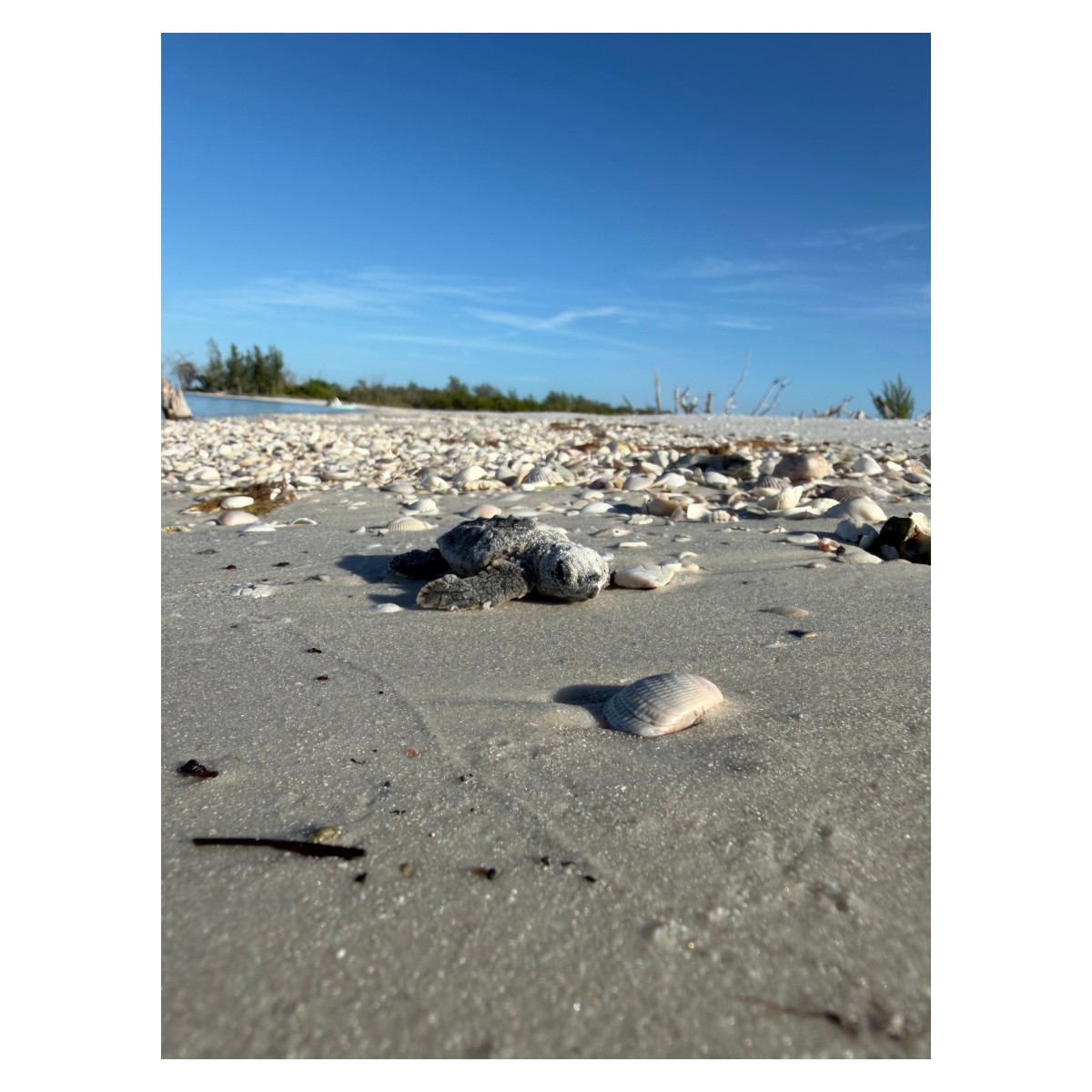
More than 12,000 baby sea turtles have emerged from nests monitored by Rookery Bay National Estuarine Research Reserve this year, marking a dramatic turnaround from a nesting season that got off to an unusually slow start.
At the same time, several of Rookery Bay’s threatened and endangered beach-nesting birds are returning to sites where they have not nested in years, making 2026 a season of encouraging developments for wildlife along the Reserve’s coast.
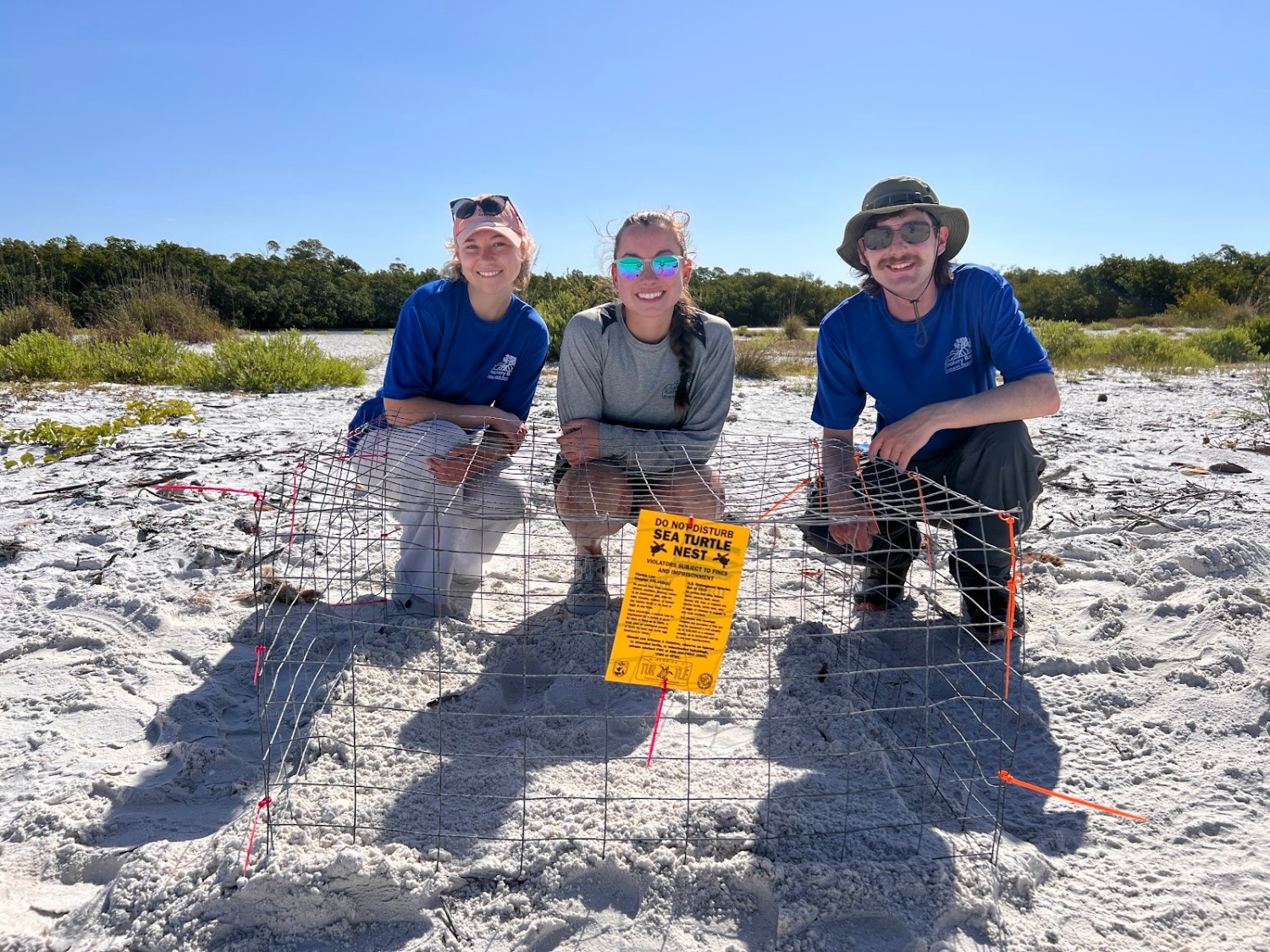
From May through October, Rookery Bay’s sea turtle team monitors the remote Reserve beaches of Cape Romano, Sea Oat Island, Cannon Island and the Ten Thousand Islands. Each morning during nesting season, staff and interns look for tracks left overnight by female sea turtles, identify and document new nests, and install protective cages where needed to reduce disturbance from predators such as racoons.
While this year’s season began with fewer nests than usual, activity increased dramatically in early June. Loggerhead sea turtles are the predominate nesting sea turtles in the Reserve, but this year the sea turtle team came across a green sea turtle nest, a rare occurrence. Biologists can often identify the species without ever seeing the turtle itself. Green sea turtles move both front flippers at the same time as they crawl, leaving behind distinctive symmetrical tracks with parallel flipper marks in the sand.
The discovery was one of many memorable moments for the three sea turtle interns who spent the summer monitoring Rookery Bay’s coastline. Their work was supported by the Friends of Rookery Bay’s Adopt-a-Sea-Turtle-Nest-Program. This year proceeds from 96 adopted nests helped fund the three interns as well as resources and supplies used for nest monitoring and protection. The program has become an important source of support for Rookery Bay’s sea turtle conservation efforts.
Although thousands of young sea turtles have already made their way toward the Gulf, the 2026 nesting season is not over yet. Rookery Bay staff will continue monitoring nests and documenting hatchling emergence into the fall.
Shorebirds Return to Historic Nesting Sites
Sea turtles are not the only coastal species giving Rookery Bay biologists reasons for optimism this year. For the first time in approximately a decade, least terns have nested on Morgan Beach. Black skimmers have also returned to nest on Sand Dollar Island for the first time in three years.
Both species depend on relatively undisturbed stretches of open beach and sand for nesting, making their return to these sites an encouraging development for Rookery Bay’s avian monitoring and management efforts.
Throughout nesting season, Rookery Bay staff conduct weekly surveys of shorebird colonies from northern Keewaydin Island south to Second Chance Critical Wildlife Area. Staff record the locations of colonies along with nest and hatchling numbers. The resulting data helps researchers, land managers, conservationists and permit reviewers identify important nesting areas and make informed decisions about their protection.
Another closely watched species is the American oystercatcher. Successful American oystercatcher nesting is rare in Collier County, but for the past two years, Rookery Bay avian ecologists have observed a pair attempting to nest within the Reserve. Their nests have not yet produced fledglings due in part to predation from coyotes and fish crows, but their continued attempts offer another promising sign.
For shorebirds, successfully laying eggs is only the beginning. Many beach-nesting birds lay their eggs directly on open sand, where their natural camouflage helps protect them from predators. That same camouflage, however, can make nests nearly invisible to beachgoers. Human disturbance can also cause adult birds to leave their nests or chicks behind. In Florida’s summer heat, even a relatively short period without protection from a parent can put eggs and young birds at risk.
Visitors can help by following posted signs and seasonal beach closures, keeping dogs leashed and away from bird colonies, and giving groups of resting or nesting birds plenty of space. Rookery Bay recommends staying at least 500 feet from large concentrations of birds whenever possible and changing course if birds begin reacting to your presence.
As Rookery Bay’s 2026 nesting season continues, thousands of sea turtle hatchlings have already reached the water, while least terns, black skimmers and American oystercatchers are attempting to raise the next generation along the Reserve’s beaches.
For the scientists and interns monitoring those shores, each track in the sand, newly discovered nest and fledgling represents another piece of the larger picture of how wildlife is using and responding to Rookery Bay’s protected coastal habitats.
To learn more about Rookery Bay’s research and conservation efforts, visit https://rookerybay.org/.

Love what you're reading?
Get the best of Naples delivered to your inbox every month — local stories, events, and good news worth sharing.
Subscribe for Free