

For most people, spotting an American crocodile in Florida is a once-in-a-lifetime experience, but for Rookery Bay’s Resource Management Specialist Steve Bertone, every nesting season offers insight into the hidden world of one of Florida’s most secretive reptiles. This year’s season was no exception.
Each spring, Rookery Bay National Estuarine Research Reserve staff begin a new season of one of the Reserve’s longest-running wildlife monitoring efforts. American crocodile nests are monitored throughout the season using trail cameras and weekly field observations, with additional site visits conducted with researchers from the University of Florida. Nearly three decades of conservation and scientific collaboration has helped document the return of a species once thought to be nearly absent from Southwest Florida.
FROM AN UNEXPECTED DISCOVERY TO A LONG-TERM STUDY
Although local residents occasionally reported seeing crocodiles around Marco Island before the 1990s, the species was not officially documented in the area until 1996. During runway improvements at the Marco Island Airport, workers preparing to trim mangroves noticed there were more than just alligators in the water. Several crew members from Guatemala—where American crocodiles are native—immediately recognized the reptiles as crocodiles. A biologist confirmed they were indeed American crocodiles, prompting state and federal agencies, in conjunction with Rookery Bay and the University of Florida, to develop a monitoring plan to ensure nearby construction would not disturb nesting activity. That collaboration eventually evolved into the monitoring program that Rookery Bay continues today.
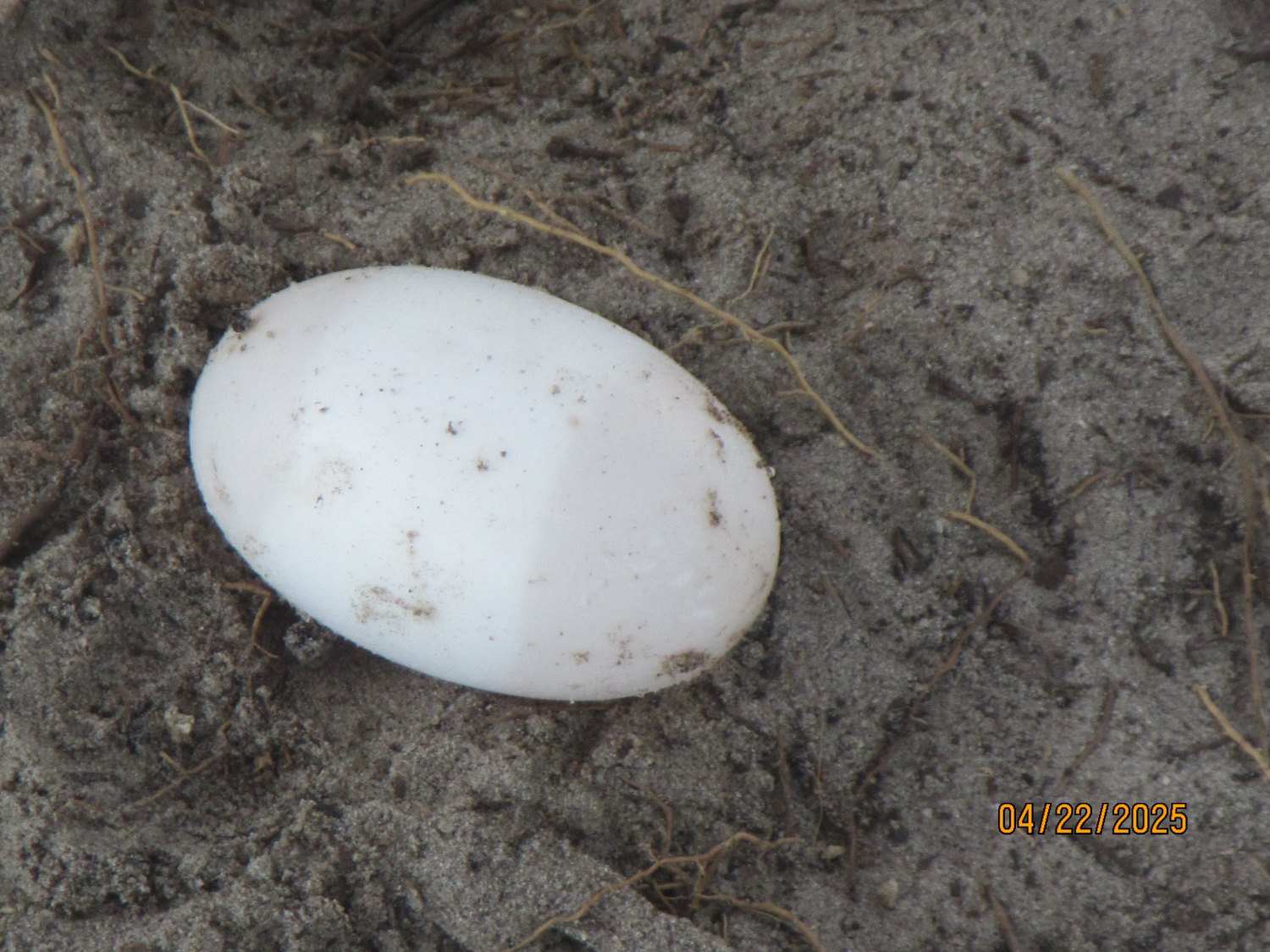
Since the late 1990s, scientists have documented nest conditions, weather, water quality, crocodile behavior, and nesting success each year. Wildlife cameras were later added to the protocol, allowing researchers to observe activity around nests while minimizing disturbance.
CAMERAS CAPTURE A MOTHER’S DEDICATION
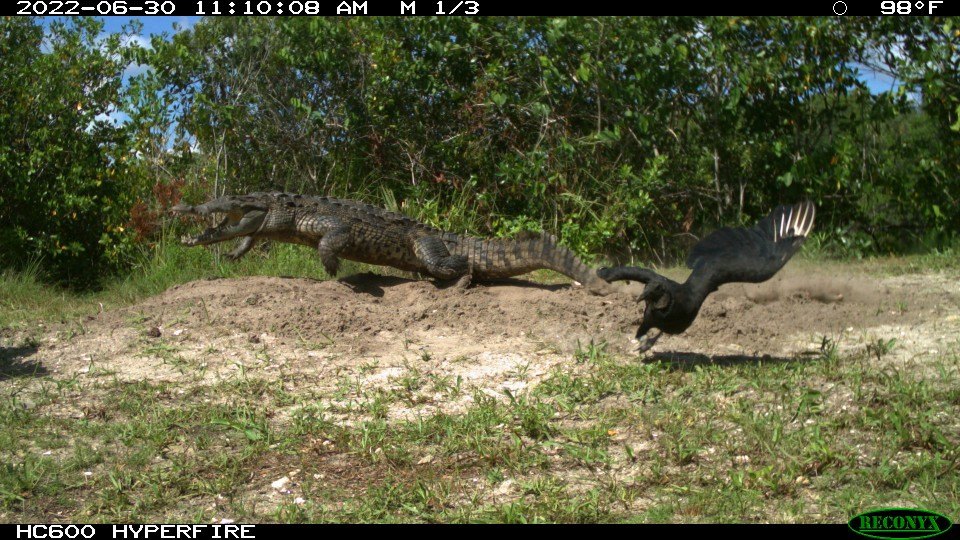
This season’s cameras once again revealed just how attentive American crocodile mothers can be. Throughout the summer, the cameras recorded an assortment of curious visitors investigating the nest, including iguanas, a coyote, a black bear, and a particularly persistent Great Blue Heron. Remarkably, the female crocodile kept an eye on the nest throughout the season, fending off any predators and smoothing out the sand over the nest after any disturbance.
A LONG NIGHT REWARDED
Later in the season, Bertone, Environmental Specialist Celina Ceballos, and researchers from the University of Florida’s Croc Docs program returned under the cover of darkness to find, measure, and mark the crocodile hatchlings.
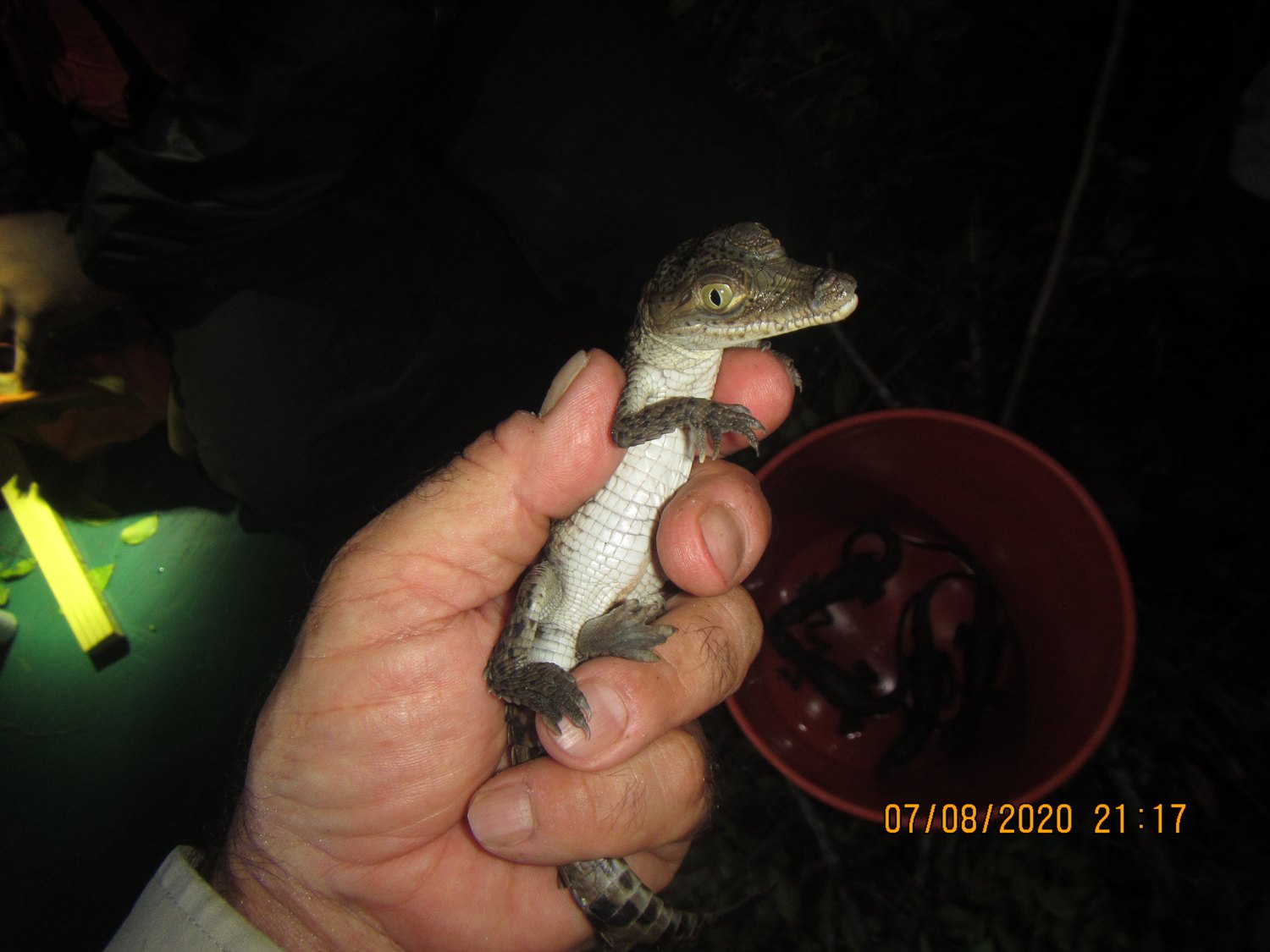
The evening tested everyone’s patience. Thunderstorms rolled through the area as lightning flashed in the distance. Mosquitoes filled the air while researchers searched by canoe and headlamp for tiny reflections of crocodile eyes hidden among the mangroves. Hours later, just before midnight, the team finally heard the words they had been hoping for: “We found a hatchling.”
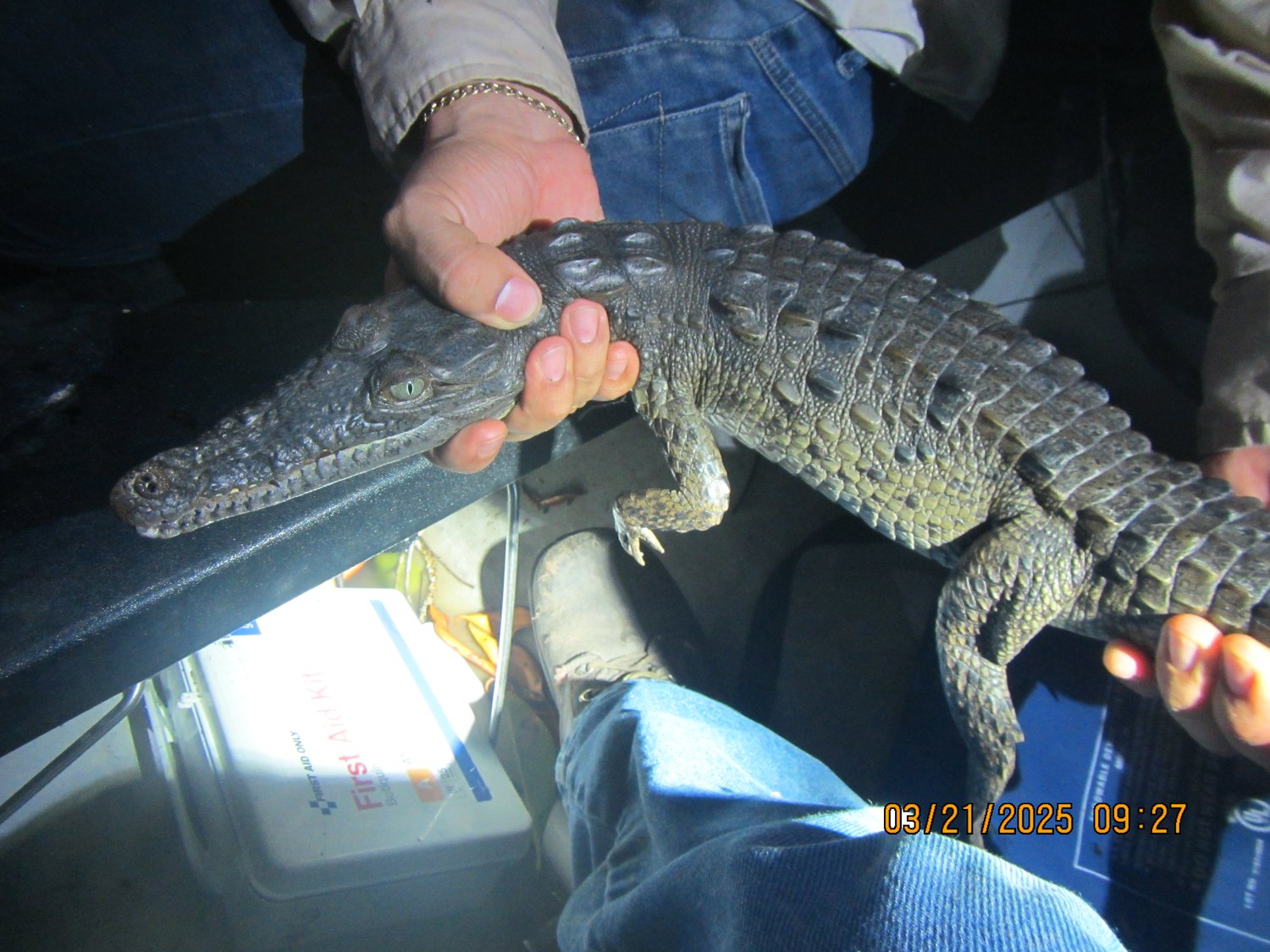
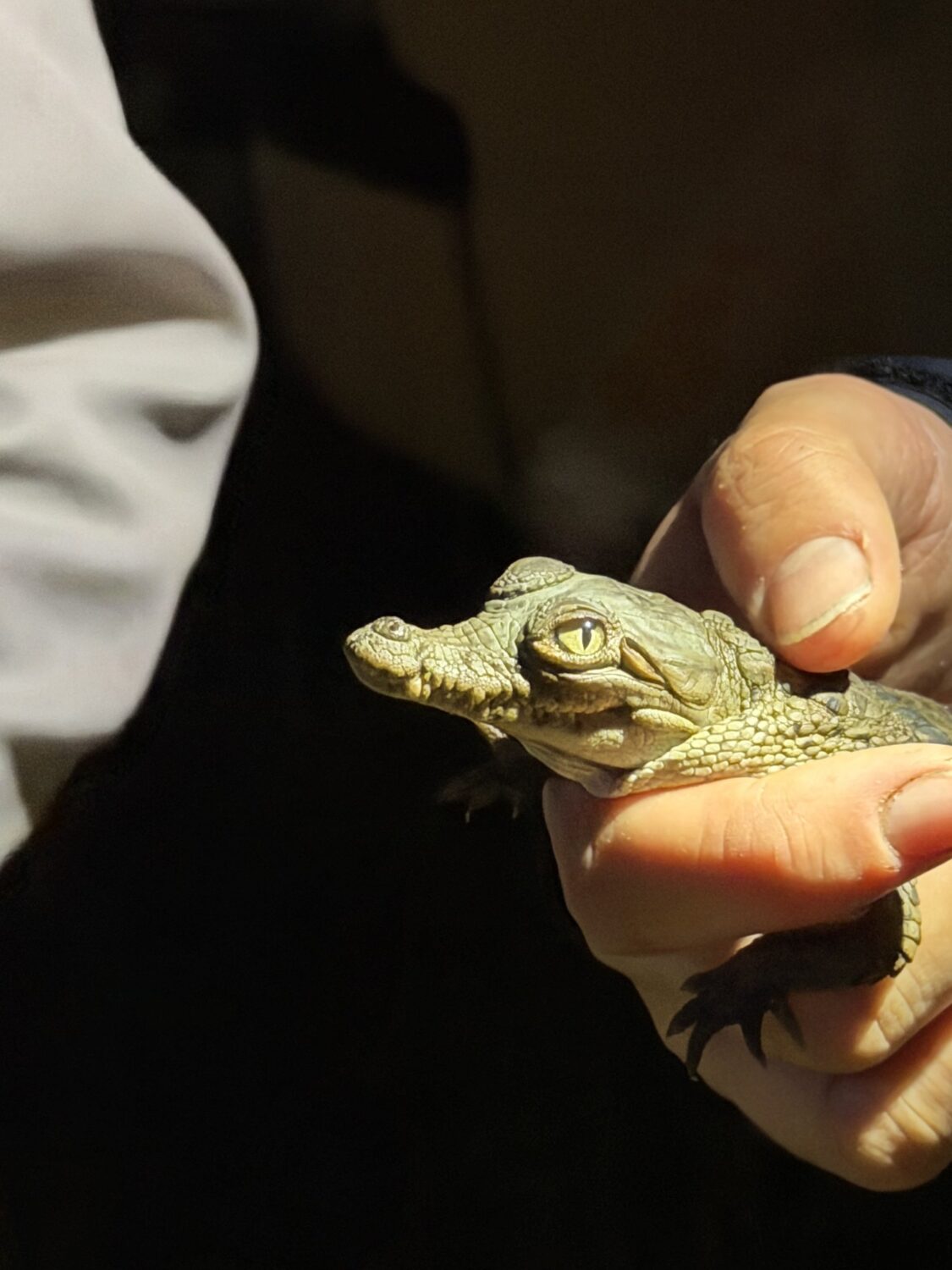
The young crocodiles were carefully captured and briefly examined before being released. Researchers recorded their weight and length and created a unique identification mark using small tail scale clips, allowing the animals to be recognized if encountered again in the future.
Although earlier reconnaissance revealed that the nest had originally produced many more hatchlings than the team located that evening, the mother had apparently escorted most of them away before the survey team arrived. Even a single hatchling provides valuable scientific data that will contribute to long-term research on the species.
A GROWING POPULATION
The Reserve’s monitoring efforts are also revealing encouraging trends. Between 1998 and 2019, researchers documented only 16 crocodile sightings, averaging fewer than one sighting each year. From 2020 through 2025, that number increased dramatically to 53 sightings, averaging more than 10 sightings annually.
Researchers have also documented remarkable movements by individual crocodiles. One of the nesting females at Rookery Bay was originally caught and marked as a hatchling in 2004 in Monroe County, while another crocodile in the Rookery Bay area was captured as a hatchling in 2012 in Monroe County—more than 80 miles away—a journey likely exceeding 100 miles through connected but sinuous coastal waterways.
Even hatchlings monitored at Rookery Bay are beginning to tell their own stories. One young crocodile first marked at the Reserve in 2023 was recaptured several miles away just two years later, providing valuable insight into how juvenile crocodiles use Southwest Florida’s estuaries.
LOOKING AHEAD
As American crocodile sightings become more common throughout Southwest Florida, Rookery Bay researchers are continuing to expand their understanding of the species. Future work includes searching for additional nesting sites, conducting contaminant studies, expanding spotlight surveys, maintaining the Reserve’s long-term sighting database, and educating the public about safely coexisting with crocodiles.
For Bertone, however, the greatest reward remains catching a glimpse of the lives of these elusive creatures and watching a new generation of crocodiles begin their journey. Each hatchling represents another step forward for a species that was once endangered throughout much of its range and serves as a reminder of what long-term conservation can accomplish.
You can help Rookery Bay and the University of Florida track crocodiles in Southwest Florida by emailing crocodile sighting information and pictures to Rookery Bay Environmental Specialist Cody Weber at [email protected].
Love what you're reading?
Get the best of Naples delivered to your inbox every month — local stories, events, and good news worth sharing.
Subscribe for Free